
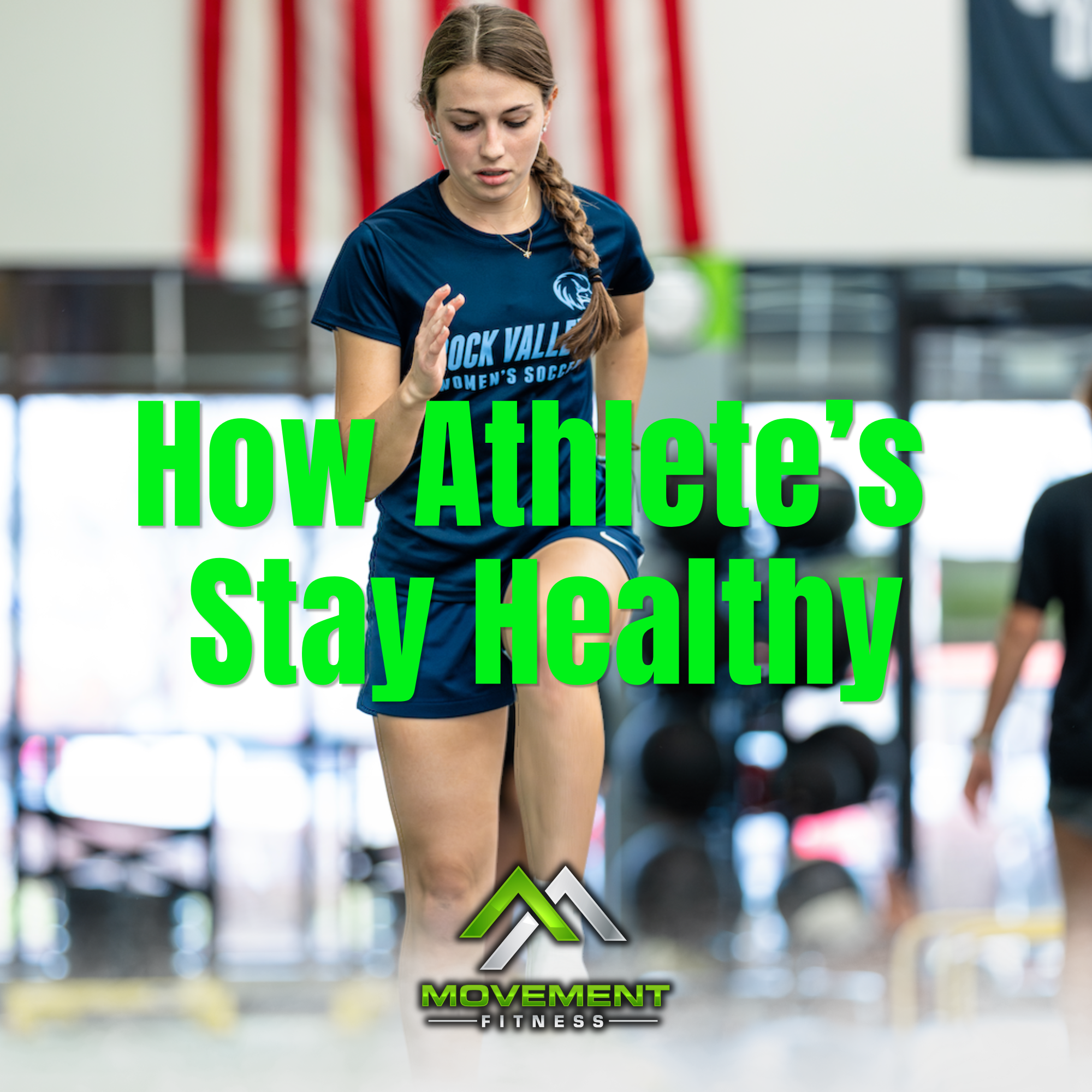
How Athlete’s Stay Healthy
You’ve invested years of time, thousands of dollars, and countless weekends into your athlete’s development. Practice after practice. Tournament after tournament. And then it happens — a non-contact ACL tear. A bad ankle sprain that keeps coming back. A knee that just won’t cooperate.
The heartbreak isn’t just physical. It’s watching your athlete lose a season, lose confidence, and sometimes lose their love for the sport. And the hardest part? Most of these injuries are preventable.
At Movement Fitness, injury reduction is not a side benefit of our training. It is a primary goal — built into every warm-up, every exercise selection, and every session we run.
Where Injuries Actually Start
Here’s what most people get wrong about sports injuries: they focus on where the injury happens, not where it starts. A knee injury usually doesn’t start in the knee. It starts in the hips. In the core. In the foot. In the patterns the athlete has practiced thousands of times — patterns that place excessive stress on joints that were never designed to absorb it.
When an athlete lands from a jump with their knees caving inward, that’s not bad luck. That’s a neuromuscular pattern that hasn’t been trained. When an ankle sprain keeps recurring, it’s usually because stability was never truly restored. When an ACL tears on a non-contact cut, it’s often because the glutes weren’t firing correctly and the core wasn’t stabilizing the way it should have been.
This is why injury reduction training must happen before the injury. Not after.
The Three Systems We Train to Keep Athletes Healthy
- Single-Leg Strength and Stability
Sports are played almost entirely on one leg at a time. Cutting, landing, sprinting, decelerating — these are all single-leg demands. When an athlete hasn’t trained those patterns with strength and control, their body compensates. The knee caves, the hip drops, the ankle rolls.
We prioritize single-leg training in every session: split squats, single-leg deadlifts, single-leg hops, and lateral movements that build the stability the knee needs in real athletic scenarios. This is one of the most evidence-backed ways to reduce ACL injury risk, and it’s built into our system for every athlete we train.
- Landing Mechanics
One of the biggest risk factors for ACL injury is landing in a position that overloads the knee. Female athletes especially tend to land stiff-legged or with knees caving inward — not because they’re not trying hard, but because they’ve never been coached through the movement.
We teach athletes how to land softly, absorb force through the hips, and control their body in the most vulnerable positions. That skill must be trained repeatedly to become automatic under game pressure. Knowing the right position and being able to hold it in the fourth quarter of a game are two different things. We train both.
- Core Stability — The Real Kind
Not crunches. Not sit-ups. Real core training — the kind that teaches the trunk, hips, and pelvis to stay stable and transfer force efficiently during sprinting, cutting, jumping, and absorbing contact.
When the core can’t stabilize, the knee compensates. The back compensates. The ankle compensates. Injury follows. When the core is trained properly — anti-rotation, anti-lateral flexion, anti-extension — the entire body moves with more control and significantly less risk.
The Ankle-ACL Connection Nobody Talks About
Here’s something that often surprises parents: if your athlete has had an ankle sprain, their risk of tearing their ACL is five times higher than an athlete who has not had one. Five times.
Why? Because a sprained ankle, even when it “feels fine,” often leaves proprioceptive deficits — gaps in how the nervous system communicates with the hip and knee. Those gaps disrupt glute activation, which disrupts core stability, which puts the ACL in danger.
At Movement Fitness, we take ankle history seriously. We train foot strength, balance, and lower-leg stability because the foundation of athletic movement starts at the floor.
Injury Prevention Is Performance Enhancement
Everything we do to keep an athlete healthy also makes them better. Stronger hips mean more explosive cuts. Better landing mechanics mean more confident jumps. A stable core means more power in every sprint.
Injury reduction and performance training are not separate programs. At Movement Fitness, they are the same program.
Your athlete deserves to stay healthy and compete at their best. Let’s build that foundation together.
📍 Movement Fitness | Rockford, Illinois 📞 [Contact Us to Get Started] | 🌐 [movementfitness.com]